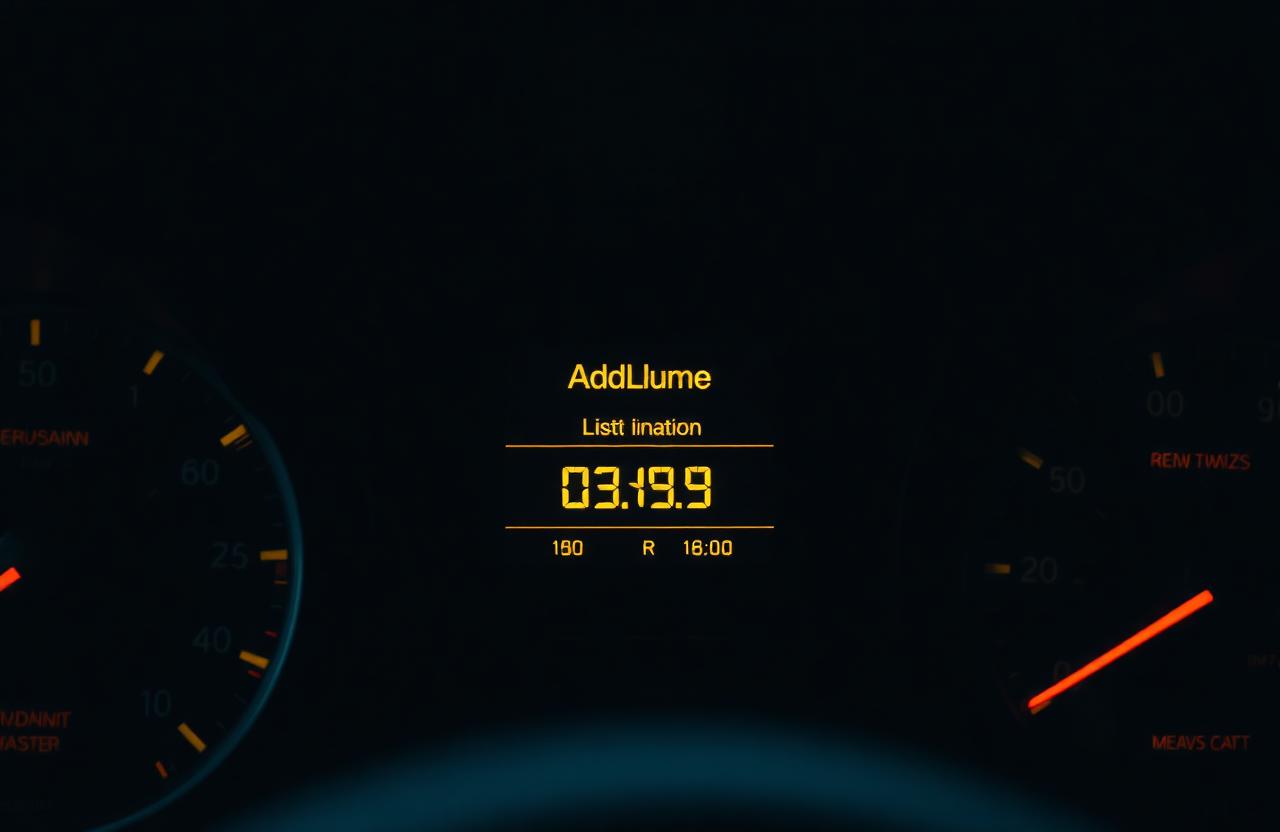
Mercedes AdBlue Countdown — How to Stop 'No Engine Start in X Miles'
Why the Mercedes AdBlue countdown appears, what it really means, and how to clear it before the no-start lockout hits.
Few dashboard messages cause more panic than 'No engine start in 20 starts' on a Mercedes Sprinter or C-Class. The AdBlue countdown is the vehicle's last warning before it refuses to start at all. The good news: it is almost always a fixable sensor, dosing or NOx fault — not a write-off. The bad news: every key cycle counts down whether you drive or not, so it needs proper diagnosis quickly.
Symptoms
- 'AdBlue — refill / no engine start in X miles' on the dashboard
- Countdown decreases with every key cycle, not by mileage
- Yellow AdBlue warning lit even after a top-up
- Engine in limp mode under load (common on Sprinter OM651)
- Check Engine light alongside the AdBlue warning
Common fault codes
| Code | Meaning |
|---|---|
| P229F | NOx sensor downstream — circuit / signal |
| P207F | Reductant quality (AdBlue) out of range |
| P204F | Reductant system performance |
| P20E8 | Reductant pressure too low |
What actually causes it
NOx sensor failure (most common)
Upstream or downstream NOx sensors degrade over time, especially on the Sprinter, Vito and C-Class OM651. Once the ECU sees an out-of-range signal for long enough, the AdBlue counter starts. Mercedes requires the new sensor to be coded — a swap without coding will not clear the count.
AdBlue dosing module / injector crystallisation
The injector that sprays AdBlue into the exhaust crystallises with urea deposits. Pressure drops, dosing accuracy fails, and the SCR catalyst stops reducing NOx to spec. The system logs a reductant fault and starts the countdown.
AdBlue pump or pressure line fault
On higher-mileage Sprinters the pump assembly inside the tank can lose pressure. Live data will show pressure outside the target window even on a freshly filled tank.
Software / EOL adaptation lost
After a battery disconnect or a poor-quality dealer software update, the SCR adaptation values can drift, triggering a false dosing fault.
How we diagnose it
- Full Xentry-level scan of EGS, ME/CDI, SCR and instrument cluster — not just a generic OBD read
- Live data: pump pressure, NOx sensor signals upstream and downstream, SCR catalyst temperature, dosing duty cycle
- Confirm the failing component before any part is ordered — many 'NOx sensor' jobs are actually dosing or wiring faults
The repair, done properly
- OE-spec replacement of the faulty NOx sensor, dosing module or pump
- Coding and adaptation of the new component to the vehicle via Xentry
- SCR system adaptation reset and short road-test verification
- Once the underlying fault is cleared, the countdown is reset legally through the diagnostic process
Cost guide
Most Mercedes AdBlue countdown repairs fall between a single NOx sensor replacement and a full dosing module job. We give a fixed quote after the diagnostic so there are no surprises — typically significantly less than main-dealer pricing for the same OE parts.
How to prevent it next time
- Only ever use AdBlue / DEF that meets ISO 22241 — supermarket no-name fluid is the biggest cause of dosing faults
- Top up before the level reaches empty, ideally above 1/4
- Don't ignore the first yellow AdBlue warning — that is the cheap stage to fix
- On low-mileage Sprinters and Vitos, take the vehicle for a proper 30+ minute motorway run monthly to keep the SCR system regenerated
Mercedes-Benz AdBlue trouble? Let's get it sorted.
Dealer-level diagnostics, OE-quality parts, full coding included.
5 / 5
Based on 297+ Google reviews for our sister business Fast Lane Performance — the same team behind Fastlane AdBlue Solutions.
Read all reviews on Google →FAQs
More AdBlue guides

Why the Renault Master keeps logging AdBlue faults, the parts that actually fail, and how to make the fix stick.
The two Ford Transit AdBlue faults we see every single week — and the diagnostic that tells them apart in minutes.

The Peugeot BlueHDi AdBlue warning has one of the strictest lockout strategies on the road. Here is what it means at each stage — and what to do.
Related help
Quick links to popular services, brands, fault codes and coverage areas.